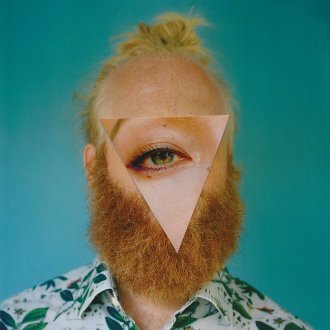
Whether it’s through their own material or someone else’s, Little Dragon have established themselves as one of the most alluring and eclectic acts of this decade. From collaborations with Gorillaz, SBTRKT, Big Boi, DJ Shadow and Kaytranada among others, to critically acclaimed full-lengths running the musical gamut from trip hop to soul to synth-pop and multiple places in between, the Swedish electronic group take influence mainly from the clubs with new EP Lover Chanting – released this time via Ninja Tune; home to Bonobo, Amon Tobin and Machinedrum. Following their somewhat downbeat 2017 effort Season High, they pull a 180 by taking things in a dancier, more exuberant direction this time around, even if the sample size is small.
The EP’s title track and lead single is a bouncy, infectious number with a disco/soul feel, with Yukimi Nagano’s uniquely exquisite voice on the verses – with some Prince-esque harmonies sprinkled in the mix as well – while drummer Erik Bodin takes centre stage on its equally sprightly hook (“Do you wanna be my girl? I wanna be, be your man”). It’s a spirited and extremely groovy single with a distinct, ‘70s/‘80s nightclub vibe, and some cleverly-written lines about dedication to your significant other (“No hurricanes nor the best cocaine will steal my love.”)
Second track “In My House” is an exercise in loungier and more experimental deep house, very in line with the Ninja Tune sound – so much so that it wouldn’t sound out of place in a Bonobo DJ set. While it doesn’t pack the title song’s melodic punch, it still serves its purpose as a wispy, percussion-driven midway point, complete with the sound of rolling waves as the track comes to a close. Things get back to a groovier feel with the third and final new track “Timothy”, with a whistle intro; a memorable hook (“Timothy play your song, ooh, to the break of dawn”); and easygoing, R&B-meets-synth-pop instrumentation serving as its backbone.
While it only consists of three new songs plus a radio edit of the title track tacked onto the end, Lover Chanting still acts as an intriguing taste of Little Dragon’s ability to focus squarely on getting listeners ready to dance rather than jump from one mood and style to the next – a direction they’d do well to expand on with a proper LP, whenever that arrives.
Another year of POP Montreal is halfway through, with plenty of great sets – and annoying scheduling conflicts – already having left their mark on this year’s edition of the festival. One of the biggest things about POP is not only in its ability to turn your attention toward acts you may only have a passing familiarity with (as was the case for me this year), but that it covers all end of the musical spectrum – experimental, lo-fi, hip hop, jazz, reggae, etc – and traces of all of those genres and more can be found in the first few days of the influential Montreal festival’s 17th year. Here are some highlights from the first half of POP Montreal 2018.
Oneohtrix Point Never: Playing a headline show also acting as part of this year’s Red Bull Music Festival, Daniel Lopatin and two other musicians took to the stage in front of a packed crowd at the Monument-National, with his meticulous yet highly experimental and ambient soundscapes illuminating the elegant concert hall. The combination of his music, use of samples, and glitchy sound effects with eye-popping 3D visuals – sometimes state of the art, other times deliberately cheesy and outdated – made for an extremely immersive concert experience. Between flashing lights, piercing synths, orchestral arrangements, and Lopatin’s haunting, vocoder-heavy vocals (when he wasn’t performing instrumental tracks, that is), the concert became a meditative and sweeping audiovisual experience that not only fit its environment like a glove, but also blurred the lines nicely between an electronic act and a beautifully-crafted art showcase that ended with a standing ovation – not bad for the last show of their most recent tour.
Clairmont the Second: This feisty Toronto rapper came through the Late Night at the Piccolo Rialto for his final show of 2018, spending most of it spitting his rhymes with a punchy style of delivery over solidly produced beats… and complaining about the crowd’s lack of enthusiasm in spite of it. While the crowd was indeed relatively sparse – he was on around midnight on a Wednesday night – he made the best of it even if people were likely tuckered out and needing to wake up for work the next morning. His bemoaning of the lack of crowd activity took away from the experience a bit, but a fun set nonetheless.
Venus Furs: Despite what their name may imply, this local trio don’t have a strong Velvet Underground feel to their sound. Instead, the band took to the stage at the tiny, intimate L’Esco on Thursday night surrounded by red lighting and what the band themselves describe as “the alternative to psychedelic surf punk.” Frontman/guitarist Paul Kasner’s soft-spoken voice meshed quite well with their energetic, bass line-driven tunes with a slight ‘90s alternative rock edge to it, and was well-received by the crowd in spite of the band’s relatively early 9 p.m. start time.
Caveboy: Having had the opportunity to record music in Ireland, win the Juno Master Class, and have their music featured on Orange is the New Black – as highlighted in our recent interview with their lead vocalist/guitarist Michelle Bensimon – Caveboy are a band who seem poised to keep growing in stature despite not having released a proper debut LP yet. The West Island natives perform with finesse, confidence, and a catalogue of fun, old and new-school inspired indie pop music, with a heavy influence from ‘80s new wave and pop (closing with a cover of Whitney Houston’s “I Wanna Dance with Somebody”). They aren’t afraid to let loose on stage, either; with Bensimon and bassist/keyboardist Isabelle Banos banging sticks on drummer Lana Cooney’s kit at one point in their set Thursday at O Patro Vys. With a crowd dancing and bouncing around throughout their show, Caveboy are one of Montreal’s more charismatic live bands, and proved it once again with their fairly brief 30-minute set time breezing by as a result.
Sydanie and JPEGMAFIA: Late on Thursday came one of this year’s festival’s marquee rap shows, headlined at Le Belmont by critically-acclaimed Baltimore noise rapper JPEGMAFIA. Performing just before him was Toronto emcee Sydanie, whose vivacious personality shone through both in her hilarious stage banter and the songs themselves – one of which saw her rhyme forcefully over Flying Lotus’ “Camel”. Even if the crowd was mostly waiting for JPEG to come onstage, Sydanie did her best to whet their appetites with tracks running the gamut from trap to house and electronica.
And then… “PEGGY! PEGGY! PEGGY!” The rambunctious and explosive rapper was a perfect fit for Le Belmont’s dark and somewhat gritty atmosphere, with the crowd going absolutely bonkers for him and his loud and aggressive delivery. His screaming may have overpowered the already frantic and bass-heavy beats themselves, but it worked nicely in his favour, amping fans up with freestyles, compliments toward Canada’s quality of marijuana, and even a brief singalong of Clipse’s “Keys Open Doors” when he found someone’s lost keys onstage. The emcee born Barrington Hendricks wasn’t afraid to throw shade, either, with Kanye West, Donald Trump, and notably Morrissey all drawing his ire – underlined with a rapturous performance of the aptly titled “I Cannot Fucking Wait Until Morrissey Dies”. If his live shows – and the response he gets from them – are anything to go by, JPEGMAFIA’s stock is sure to only continue to rise.
Badge Époque Ensemble and Bill Callahan: This side-by-side pairing was a tale of two extremes during this sold-out night at the Rialto Theatre. Prior to veteran singer-songwriter Bill Callahan taking the stage, experimental avant-rockers the Badge Époque Ensemble entertained with a percussionist, drummer, guitarist, bassist and flutist performing jazz-tinted instrumental numbers in front of a quiet yet receptive crowd. Their jammy rhythms and progressive song structures would stand in huge contrast to Callahan’s considerably more stripped-down affair that was to come, but it emphasizes how eclectic and wide-ranging POP’s roster of artists can be.
As for Callahan, his set would consist of little more than him and an acoustic guitar while another musician noodles on his, though his penchant for frank story-telling and folky alt-country tunes coupled with his low-pitched, somewhat grumbly voice worked extremely well with the intimate yet expansive Rialto. What I saw of his set was a mature, earnest display of a talented and underrated artist 14 albums deep into his career, with his accompanying guitarist adding a great sense of depth and duality to the performance. With that, however, I had to deal with one of the festival’s harsh realities: scheduling conflicts. Therefore, I ran over to the Fairmount Theatre to catch another major veteran act on this year’s bill. Speaking of which…
The Charlatans UK: Arriving at Fairmount midway through this legendary ‘90s band’s set, The Charlatans – erm, The Charlatans UK, that is – put on a hugely entertaining and groovy show in front of a receptive crowd who shimmied and shook throughout. Rocking a pair of overalls and one hell of a blonde bowl cut, their hypnotically-voiced frontman Tim Burgess sung and swayed his way through old and new material, though the entire set was emblematic of the Britpop and Madchester sounds they’d been known for during their heyday. With major hits back home like “The Only One I Know” and “Then” played alongside more recent cuts like “Come Home Baby” and “Plastic Machinery”, the West Midlands band put on one of this year’s festival’s most sprightly and flat-out fun sets to date.
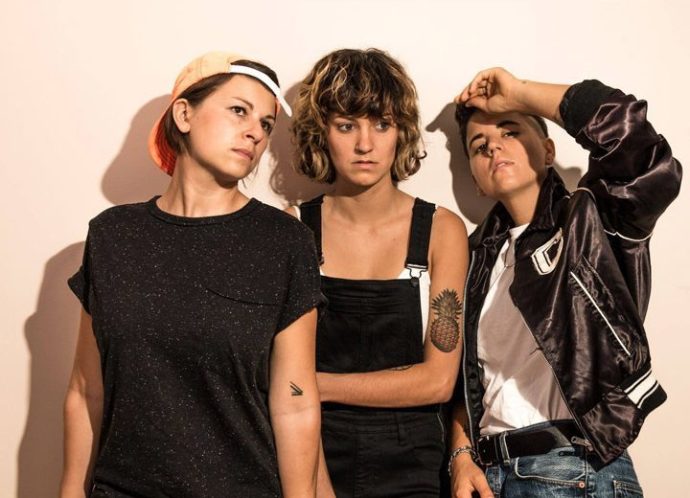
This week’s POP Montreal festival has been giving an incredible platform to artists from inside and outside Montreal since 2002, including Arcade Fire, Stars, the Unicorns and countless others. Another local band whose rise has come thanks in part to the festival is Caveboy. Comprised of lead vocalist/guitarist Michelle Bensimon, bassist Isabelle Banos and drummer Lana Cooney, this dreamy, ’70s and ’80s-influenced indie pop trio last played POP in 2016, and have since seen their young career pay serious dividends for them.
Following their 2015 self-titled debut EP (and off the strength of recent singles like “New Touch”, “Landslide” and “Color War”), they’ve made their way onto multiple North American festival bills – playing SXSW, Osheaga, and Canadian Music Week among others. They’ve also won the 2018 Allan Slaight Juno Master Class; had the chance to record at Ireland’s legendary Grouse Lodge Studios (Michael Jackson, R.E.M., Muse) for two weeks last year; played the 2017 Pre-Grammy Celebration of Canadian Excellence in Los Angeles; and have seen their songs used in shows like Orange is the New Black, Awkward, and You’re the Worst.
Northern Transmissions spoke to Bensimon over the phone ahead of the band’s two upcoming shows at POP Montreal (September 27 at O Patro Vys, and September 28 at Casa del Popolo), as well as a POP Symposium on Thursday the 27th where she’ll be moderating a discussion about music licensing and how songs can get onto film and TV. Here, she talks to us about the band’s formation, their history with POP, and their plans for touring and new music going into 2019.
Northern Transmissions: You’re about to play two shows at POP this year; one at O Patro Vys on the 27th, and another at Casa del Popolo the following night. How are you feeling leading up to those shows?
Michelle Bensimon: We’re really excited. It’s going to be interesting, because we’ve been writing for the last little while and getting deep in new music. It’s exciting because I think we’re going to test out a new song that we’ve been working on that we’ve never played. It’s a great opportunity for us to showcase our old music that’s still doing well, and then the new stuff; what people can expect in the next little while.
NT: What can people expect from you guys in the next little while musically?
MB: We’ve been fortunate enough to have been very busy over the last little while. The thing is, when you’re playing shows and running around, you don’t necessarily have time to jump in the studio and write and record. We’ve been spending the last little while going through the music that we’ve written in the last two years, and we’ve been finalizing to prepare to go into the studio before the end of the year. We’re getting our album all together for next year.
NT: I saw you guys play POP Montreal previously in 2016 opening for Let’s Eat Grandma at Bar Le Ritz. How much do you think things have changed for your band in the two years following that show?
MB: Two years! That’s crazy. So much has changed. We love POP Montreal so much. Montreal’s an interesting music scene. It’s fun; there’s just so many bands, and always so many shows, and always so much to do. POP has always given us a chance and an opportunity to meet a lot of really great people. They’ve always had our backs. In the last two years, since doing the Juno Master Class [earlier this year], and then we got to play at the Juno gala dinner this year in Vancouver, so much has changed since then. Having toured across Canada, having met new fans in new cities and then coming back home now, I think it’ll be quite different than two years ago. Maybe less of our family and friends in the audience. *laughs*
NT: How do you think POP Montreal helps both the scene here and the artists who come from it both in the short and long term?
MB: POP is so great at connecting artists with the people that we need to be connected with. We’ve gotten so many awesome opportunities because of our POP shows. Most of our bigger things were because somebody was in the room at our POP show. We met our publishers from a POP speed dating [event] four years ago. It’s been so great for us every year, something interesting always happens. Someone interesting is at a show. That’s the thing – there’s that opportunity for bands who don’t know anyone to actually play for some really high-level people who could make a difference in their career.
NT: POP speed dating?! I didn’t know that was a thing.
MB: It’s awesome! It’s amazing. There’s so many symposiums and so many opportunities to meet the delegates that are coming in. It might seem like, “Oh, do I want to go to that?” But I would suggest to bands to go to those things. Go meet the labels, go talk to the festival bookers, go and do everything you can. Listen to people speak. I’m actually going to be moderating a think panel, talking about music in TV and film, because Caveboy has had a lot of placements in TV and film. That’ll be super fun. I would suggest for people to go check stuff out, because that’s why the delegates are here and POP is so great at connecting the artists.
NT: Where and when is the panel going to be?
MB: It’s on Thursday [September 27] where the POP symposiums are [at the Piccolo Rialto]. It’s from 12 to 3.
NT: Coming from a city like Montreal with such a rich musical history and being such a fertile place for artists to come up through in recent years, do you find that to be a blessing because of how much attention Montreal gets for its artists on a national and international scale? Or is it more of a curse because there’s a relatively crowded pool of artists here?
MB: I think it really works for us in places other than Montreal. We go to Toronto, we go to the States, and I think it works that we’re from Montreal. I think it has an element to it that is quite helpful. There’s a niche here. The style of music we’re doing, I don’t find there’s hundreds and hundreds of bands [here] who are doing this blend of the old and the new – a lot of ‘70s and ‘80s influence meets now. There’s room for all of us, really. I feel like it’s more of a blessing than a curse, for sure.
NT: Your bandmates Isabelle [Banos, bass] and Lana [Cooney, drums] had first met in CEGEP and had already been playing for quite some time before you joined the band as well. How’d you get acquainted with them?
MB: I actually knew Lana when we were kids. We played soccer together at the age of four to seven. I was living in Toronto – I’m born and raised in Montreal, but I was going to school there – and I started dabbling in music. I remember sending Lana a song back when Facebook was public, when everything you posted was a public message. I definitely still have it somewhere. I guess I posted on her wall or something, like “I have this song. I know you’re a really great drummer, and I’d love to send it to you. Maybe you could put drums on it.” She was like, “My friend Isabelle is really into electronic music now.” This was eight years ago. I was coming into town for something, and we jammed together. We just vibed so much. I never moved back to Toronto; I had all my stuff sent back to Montreal, and relocated back home. It was the best decision ever.
NT: Since I’m interviewing you for POP, the three of you have also become mainstays on the festival circuit in Canada in recent years, especially at POP, Canadian Music Week, Osheaga, Hillside in Guelph, and Rifflandia in Victoria among others. What’s the most rewarding part about doing festivals like these?
MB: I love festivals so much, because I feel like most of the time the people who are going are just music lovers. They want to see music, they want to discover new artists. I went to the first Osheaga [in 2006], I went to every single Osheaga… I remember when I went to the first Osheaga, I said, “That’s exactly what I want to do with my life.” It’s because of going to that festival that I realized I really wanted to give this a try and see what I could do with music. I feel like there must be so many other people like me who go to festivals and discover all these new artists and get inspired and just have the most amazing time. Sometimes you’re at the same festivals as the same bands as you’re travelling through the circuit, and that’s super exciting. You get to meet all sorts of people. I love festivals so much, I think they’re so much fun.
NT: You won the recording festival contest which got you a two-week residency at the Grouse Lodge Studios in Ireland. How much did that experience help you in terms of growing as a band and developing your sound?
MB: That was an incredible experience. Just being somewhere completely different and being ina studio with so much history, we were really able to write and record a bunch of stuff. Actually, some of the stuff we did there will transfer now into this new phase of finishing up the album. It’s really exciting. It’s just another really awesome, cool thing that we’ve gotten to do. It’s a very special studio.
NT: Your music has also been featured on show like Orange is the New Black, Awkward, Killjoys, and You’re the Worst. How much has use of your songs on shows like that helped you as far as exposure goes?
MB: It’s crazy how much. If you think of [shows like] The O.C., I remember I would watch that show, and I would look up every song. They would post online the list of songs that were in every episode. I was just obsessed with music in shows. I discovered so many bands that way. That’s still very much a thing, and there are so many people on YouTube, on Twitter – these TV and movie lovers who’ll get so excited about music when it’s placed right in a show or film. We actually just had our song “Something Like Summer” in the trailer for a new movie called The New Romantic, starring Jessica Barden from The End of the F***ing World, and Camila Mendes and a couple other people from Riverdale. It’s crazy how much that’s already brought us some attention, and that just came out a couple of days ago. We love when our music gets placed. Again, we met our team at POP Montreal four years ago, so it all happened because of POP. It really goes full circle.
NT: There’s been a real fascination with ‘80s-inspired stuff lately in pop culture, and there’s definitely shades of that kind of sound in your music. What is it about music and cultural trends from the Ronald Reagan era that you think is so appealing to people in 2018?
MB: The bright colours. *laughs* I think synthesizers will always be super cool. We’re all still discovering new sounds that we’re using with all this old equipment. We use a lot of analog stuff, and we’re still discovering what those things can do. They create this world that I believe has a lot of emotion, and that’s what people are hooked on. They want to hear the emotion… I have a bit of a deeper tone [in my] singing voice, and I find it very supportive of the vocals and the songs.
NT: You toured a little bit across Canada earlier this year as well, going out west back in March – the first time you’ve done a tour like that. What are some of the biggest things you took out of that experience?
MB: Ontario is very big when you’re driving through – that’s something everyone can know! *laughs* It was really awesome. I’ve never even gone through Canada that way not doing music. It was very special to be able to see a lot of our country and meet all sorts of different people. I really find each province has quite different vibes. I think it was one of those things we wanted to cross off the list. Now that we’ve done it, we’re already excited to do it again and continuing to go back to those cities and see what happens.
NT: Will you be planning on doing it again anytime soon?
MB: Possibly next year. Once we have the album out, we’re going to do a bunch of touring.
Among today’s biggest rap stars, few are as enigmatic as Travis Scott. Following two much-buzzed about mixtapes, 2013’s Owl Pharaoah and Days Before Rodeo the following year, the 26-year-old Houston rapper has experienced a career paved with peaks and valleys, as he’s garnered high sales figures and a massive following while being criticized just as much for his sound, supposed lack of originality or musical evolution, and for being well-connected relative to his talent. Now riding a tsunami of success off his recently released third album Astroworld, it leaves one to wonder if the artist born Jacques Webster is still the product of savvy networking and occasional stylistic mimicry, or if he’s finally locked down a long-term seat at the table in the upper echelon (pun intended) of modern rap music.
While La Flame’s first proper studio album, 2015’s Rodeo, has since gone platinum in the U.S. and spawned his breakthrough single “Antidote”, critical reaction to the LP was noticeably more polarizing. He’d been described as being “all a façade; an image” by Clash; “elusive and bland” by Now; and “lacking in personality” despite trying to “deliver something Scott is incapable of” by Spin. It also wouldn’t be uncommon to see some hip hop heads accuse Scott of being a “culture vulture” and just another face in a sea of hackneyed, unoriginal trap artists.
In fact, one eyebrow-raising thinkpiece was published by Deadspin in February 2015 called “Travis Scott is Worse than Iggy Azalea”, in which writer Billy Haisley not only compares him to Young Thug rather unfavourably (“Young Thug >>>>>>> Travis Scott, under any criteria imaginable,” he says), but accuses Scott of being a “shameless biter,” claiming he “has stolen whole cloth basically every idea he’s ever expressed on a record.”’
Harsh critiques, no doubt, but it’s not too difficult to see where the writer was coming from: Travis Scott’s style is undeniably derivative in certain ways. Specifically, his work owes a great deal of debt to Kanye West and Kid Cudi, in both his image and musical identity. In fact, it’s likely that Scott’s heavy use of Auto-Tune and focus on singing rather than straight spitting wouldn’t have come together without West’s divisive 2008 album 808s and Heartbreak.
West himself can be credited with giving Travia Scott his break, too: at 20, he signed with Ye’s GOOD Music imprint in late 2012 as a producer, and even appeared on the label’s Cruel Summer compilation prior to signing until Scott later inked a deal with T.I.’s Grand Hustle in April 2013. However, Travis has guideposts from many regions of the musical landscape, having worked with hip hop artists both modern and classic (Kendrick Lamar, Future, André 3000, Juicy J), and even critical darlings like Tame Impala, James Blake and Toro y Moi. Scott has also listed Björk, the Sex Pistols, Little Dragon and Coldplay among his musical influences.
While inconsistent at times, Rodeo is otherwise an assiduously constructed LP full of lyrics – limited as they may be – on drug use, hard parties, and hedonism on top of surreal, trippy soundscapes. His second album, Birds in the Trap Sing McKnight, was similar in tone, and boasted several of La Flame’s biggest hits to date (“Goosebumps”, “Pick Up the Phone”, “Biebs in the Trap”). However, it was more straightforward in concept than Rodeo, and the album’s stellar production would sometimes outweigh the songs themselves. Despite the criticisms that came Scott’s way (some justified, some not), both albums contained evident flashes of potential waiting to be fully tapped into.
Enter Astroworld: a psychedelic, immaculately produced and brazenly ambitious third LP featuring 17 tracks full of style, substance and sheer massiveness. In many ways, it’s the culmination of the flair for spectacle Scott displayed in spurts on Rodeo. Named after the defunct Six Flags theme park in his native Houston, Scott had been talking about the album before even Birds was released – in an interview with Zane Lowe, he even went so far as to call Birds a “stepping stone” compared to what he wanted to achieve with Astroworld.
His bold vision for the project both musically and artistically has already paid off in spades: after only releasing a trailer for the album less than a week before release, Astroworld went on to top the Billboard charts (where it still sits as of this writing, much to Nicki Minaj’s dismay); was certified gold a week after it dropped; and has a Metacritic score of 84 – the highest of his career to date by a comfortable margin.
The LP is grandiose, made with great attention to detail, and as wild a ride as one you’ll find at an amusement park, getting off to a rollicking start with the wavy trap banger “Stargazing” before switching the beat entirely around the 2:45 mark. Sudden changes in tone are a trope of sorts on this album, as “Sicko Mode” has two beat changes right off the bat before shifting once again in its final third to a mostly Drake-led section that would’ve fit nicely his otherwise bloated Scorpion.
Astroworld’s feature roster is essentially a who’s who of modern music’s biggest and most buzz-worthy names: Drake, Frank Ocean, the Weeknd, 21 Savage, Migos’ Quavo and Takeoff, and “Lucid Dreams” hitmaker Juice WRLD. However, its shining moments come when he joins forces with artists who allow him to step out of his comfort zone a little: through linking up with John Mayer and Thundercat for a strange and spacey interlude (“AstroThunder”), meditations on staying humble alongside Stevie Wonder on harmonica and a gorgeous James Blake outro (“Stop Trying to Be God”), and a foray into muggy psychedelic rock masterminded partly by Tame Impala’s Kevin Parker (“Skeletons”). Even by closing the album on a more tranquil note with the ‘90s hip hop-inspired “Coffee Bean”, Scott shows he isn’t afraid to deviate from the status quo musically even if it’s during the album’s closing moments.
While it’s a mixed bag of musical cohorts, their contributions to the project are rarely jarring even if those songs would still hold up without them. Scott’s Rolodex is probably full of phone numbers of artists willing to get on his next project, and it’s remarkable that an artist who’s shot to fame so rapidly has done so with each LP. That said, his guests make up only part of the equation; one that couldn’t be whole without Scott’s perspective and delivery still taking centre stage.
Given his approach to album curation, branding, and his raucous live shows, Scott not only aspires to do things bigger and better than his contemporaries, but focuses just as much on ambience and the experience than the music itself. With such an emphasis placed nowadays on maximizing streaming numbers even if it means a deeply overstuffed album (just ask fans who eagerly awaited the release of Drake’s aforementioned Scorpion and Migos’ Culture II this year), the fact that Scott focuses so much on weaving together an intricate body of work is an all too rare approach at times in today’s musical climate.
There are those who dismiss Scott’s work as hip hop where the beats and aesthetic overshadow (or are, at times, overshadowed by) his thematically repetitive lyrics and Auto-Tuned delivery, and sink or swim based on each track’s guest artists. However, it’s hard to imagine lesser artists from his realm like Lil Pump or Lil Yachty giving the masses an album like Astroworld with the same kind of impact and precision, and it’s equally difficult to envision an artist with the cadence or lyrical styles of Common, Atmosphere, Talib Kweli or even J. Cole meshing well with Scott’s spaced out, layered trap beats.
Regardless of how Scott’s managed to get to the summit of rap’s Mount Everest (being with a Kardashian-Jenner can only help you in terms of reach and exposure), he’s already reaping the rewards: he’s set to embark on an arena tour throughout North America in the fall, and has announced the first edition of his Astroworld Festival in Houston, set for November. Back in March 2017, Scott launched his own imprint, Cactus Jack Records, which should help his influence grow even further if artists on the label get serious traction themselves. Clearly, he’s gone the extra mile versus what a number of his trap contemporaries – some having been in the game longer than him – have accomplished in their careers to date, and his accomplishments are starting to match his ambition.
Having made such a huge artistic statement with Astroworld, are we witnessing an artist who’s set himself up to be here to stay; one who will be in the same league as the Kanyes, Kendricks and Drakes of the world for years to come? Given his penchant for constantly fine-tuning his sound and aesthetic, not to mention his razor-sharp focus on quality control and inclusion of features who fit his vision, it certainly seems that way. Travis Scott has described Astroworldas him “finishing the saga” he began with Rodeo, and if this is his mission statement for his quest to reach the top of the rap world, he’s either within touching distance of that apex or he’s already there. The objective now is to replicate or top his vision with album four, but Scott isn’t one to back down from a challenge.
Osheaga 2018 proves there is still hope for music festivals
Osheaga 2018 saw some of the music’s biggest and brightest acts descend upon Montreal once again for three straight days’ worth of sellout crowds – more precisely, 45,000 per day. Northern Transmissions was there every step of the way, and bore witness to some great sets, searing heat and humidity, and good vibes all around – even if a couple incidents threatened to put a damper on the festivities. Here are our superlatives for some of the biggest highlights from Osheaga 2018 (and occasional lowlights) of the weekend.
Best set: Anderson .Paak and the Free Nationals
Oh boy, where to begin. While Anderson .Paak’s been known to put on one hell of a set over the years, the California singer-rapper-drummer extraordinaire brought serious heat toward the end of an already-scorching day at Osheaga. Injecting a major jolt of funk and energy into the proceedings, he and backing band the Free Nationals played a set full of frequent crowd interaction, mosh pits(!) during cuts like “The Season / Carry Me”, and impeccable musicianship throughout from .Paak and his bandmates – including an extended solo from keyboardist Ron Avant where he talkboxed his way through Ginuwine’s “Pony” and Drake’s hit/meme du jour “In My Feelings”. Nighttime sets at Osheaga rarely get more fun than this one.
Anderson .Paak at Osheaga 2018 Photo by Patrick Beaudry
Best discovery: Tash Sultana
The 23-year-old Aussie has been described as a “one person band”, and that tag is well-earned. Sultana’s laidback, summery tunes fit the vibe of afternoons at Osheaga like a glove – especially with the scorching hot temperatures that Sunday – and their ability to flip flop between reggae, psychedelic and rock sounds seldom felt out of place. The former Melbourne busker also showed off their skills using multiple instruments and vocal techniques, such as beatboxing, pan flute, and even guitar solos – all in addition to their already impressive vocal range. While Sultana hasn’t yet released a proper studio LP (their debut album Flow State is due on the 31st), those on-hand at the Scène de la Montagne witnessed a dynamic and original young talent.
Best stage presence: Florence + the Machine
Like Arctic Monkeys, Florence + the Machine impressed greatly in her first go-round as Osheaga headliner a few years back, and 2018 was no exception. Immediately following a solid, yet sadly under-attended, performance from Ohio indie vets the National, Florence Welch delivered a festival-closing set with boundless energy and a well-oiled machine (no pun intended) of a voice. Her set was one that was expansive, theatrical and evoking a sense of unity between her and the Osheaga faithful. Jumping between tunes spanning her decade-long career thus far, Florence’s set was just as notable – if not more so – for her tendency to flutter, pirouette and twirl her way through her set as she so often does. Running barefoot from one stage to the other with style and grace (and occasionally aggressiveness), Florence would also spend a big chunk of time singing from within the crowd itself and getting them to jump up and down during songs like “Dog Days are Over” – adding a communal feeling to what was already one of the weekend’s strongest sets. Aside from Florence, there were also the Yeah Yeah Yeahs, Sylvan Esso and Kali Uchis who kept crowds entranced with struts, dance moves, and plenty of finesse, charisma and swagger.
Biggest hero: Travis Scott
Way to make the best out of a bad situation. Not only did the Houston rapper, who released his album Astroworld the same day as his Osheaga headline performance, give a rowdy, fiery (both literally and figuratively) and psychedelic set, but La Flame also knew when and how to react as soon as things started getting out of hand. Upon noticing a fan getting injured during “Way Back”, Travis immediately stopped the song and called for a medic to treat the fan and make sure they were safe. It may have been an interruption to a set that had already been running late due to issues crossing the border (more on that shortly), but good on Travis for responding to the situation appropriately.
Biggest villain: Canadian customs
Those who arrived on time for Travis Scott’s headline set at 9:45 p.m. instead saw a message on the projector saying that there was a delay due to “unforeseen circumstances”, and fans would later see live updates saying that Travis had been held up at customs, then that he was past the Turcot Interchange, and later him finally being on the island ready to perform. The only problem? He wouldn’t come on until right after 11 p.m.; in other words, after the noise curfew. When told to cut his set short after a handful of songs, he’d then rush through hits “Biebs in the Trap”, “Pick Up the Phone”, “Antidote” and “Goosebumps” before leaving. Not only is getting past the border a common headache for American rappers trying to perform in Canada, but this situation means Osheaga themselves are surely subject to fines by the city for letting his set run until around 11:40 – and according to the Montreal Gazette, one fan has already filed a class-action lawsuit against organizer Evenko because of it.
Best visuals: TIE – St. Vincent and ODESZA
St. Vincent at Osheaga 2018 Photo by Patrick Beaudry
As with just about every edition of Osheaga, there was no shortage of gorgeously-done, and occasionally weird and wacky, backdrops seen over the weekend. Always one to make thought-provoking artistic statements both musically and otherwise, St. Vincent’s set displayed videos ranging from her being punched by an anonymous boxing glove to footage of nuclear bombs, all on top of her and her bandmates’ eccentric sci-fi get-ups. Similarly, ODESZA seem to have put great effort into their visuals during their live shows, including an intro full of space imagery recalling 2001: A Space Odyssey and Interstellar, as well as pink and purple Rorschach tests during “Say My Name” and what looked like early ‘60s TV show footage during a remix of Little Eva’s “The Locomotion”. Honourable mention goes to GoldLink’s nostalgia-inducing use of Dragon Ball Z clips during his set as well.
Biggest theme with hip hop shows: Mosh pits
It wasn’t simply Anderson .Paak’s set that saw pits get opened up, but Travis Scott and GoldLink had slam dance circles of their own – each varying in intensity level, but mosh pits nonetheless. Perhaps hip hop and punk rock are closer within the musical family tree than you’d think.
Biggest theme with fashion: Hawaiian shirts
If I had a dollar for every time I saw dudes like the ones in this photo sporting a colourful, loud Aloha shirt, my bank account would be looking pretty damn happy right now.
Photo by Dave Macintyre
Worst organizational misstep: The alternate route taken to leave the festival on the Saturday
There’s only one appropriate word to describe this: shitshow. After the crowd leaving Arctic Monkeys on Saturday headed for the exits, they were instead diverted to walking past the Scène de la Vallée, where they had to take a detour for well over an hour all the way onto a bridge on the island to get back to the metro. Some would even start climbing up onto it despite being packed like sardines once we got there. At least there won’t be this problem when Osheaga returns to its previous Parc Jean-Drapeau site, right? Right?
Best political statement: Blondie
Debbie Harry and co showed yet again on Saturday that they’re more than capable of commanding crowds and putting on rousing shows decades after their glory days – a particularly impressive feat given how risky it can be booking older acts for Osheaga’s current, younger demographic (Nick Cave in 2014, anyone?). But perhaps a bigger talking point during the New York legends’ performance was Harry’s black cape, on the back of which read “STOP FUCKING THE PLANET”. While the band played a well-received set full of classic hits – songs like “Call Me” and “The Tide is High” got loud sing-alongs from the crowd and drummer Clem Burke even wore a CBGB shirt as a nod to the band’s roots – Harry’s cape statement is a cutting, and sobering, reminder of the world outside Osheaga’s three-day island of music and escapism.
SONS OF AN ILLUSTRIOUS FATHER MOVE SLOWLY BEYOND NIKOLA TESLA
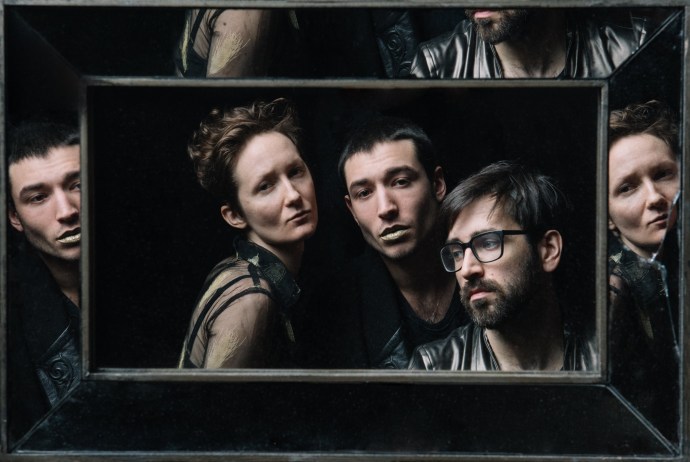
In these trying times, Sons of an Illustrious Father have the kind of fervent attitude and spirit that modern music can’t have enough of right now. Comprised of singers/multi-instrumentalists Ezra Miller (who you may also recognize through his acting career), Lilah Larson and Josh Aubin, the NYC-based trio make music that is highly political, musically diverse (or as they call it, genre-queer), boundary-pushing and unflinchingly earnest – all in varying doses. We caught up with all three members ahead of the June 1 release of their newest album Deus Sex Machina; or, Moving Slowly Beyond Nikola Tesla, where we discussed their songwriting process while jumping between instruments, turning surf punk tunes into eight-minute epics, happy accidents, and tinnitus.
Northern Transmissions: You’ve called your album Deus Sex Machina; or, Moving Slowly Beyond Nikola Tesla. What was the inspiration for the album title being two titles in one, and what does it mean to you with regards to the project itself?
Ezra Miller: It goes like this – what is expressed is something indescribable, something I wouldn’t hesitate to call divine. When we make art, what is expressed is beyond our understanding. How we express it is through the vehicle of our bodies, which is all that we have. In turn, how does it come to light in the world, and how do you hear it?… It’s through the extensions of ourselves that we in turn created. Instruments, first and foremost, then recording sounds – the vast digital network through which things are made, and the phones we’re talking through now. That’s the Deus, the Sex and the Machina of Deus Sex Machina. It’s sort of a meditation on channels and frequencies that pass through those channels, and the master of frequency, of course, Nikola Tesla. [He] was betrayed by the world; it didn’t accept Nikola Tesla’s brilliance and everything that he was trying to be a channel for into our world. We chose this means of generating and channeling energy that’s left humanity now in the most serious pickle.
NT: You’ve described yourselves as starting out as “a band with a process” when making music, where you’d write songs individually before you eventually started writing together more often. With that in mind, how did the songwriting process manifest itself with this new LP?
Josh Aubin: A little bit of both. We still had stems that we brought to each other. We also spent a lot more time in the studio recording together in the beginning phases of this album’s creation. A lot of the songs lent themselves to that simultaneous recording and songwriting process, coming as well from stems of songs that we created individually in different spaces.
EM: This is definitely the first album wherein you find songs where different people wrote different parts of one song. That evolution of being more collaborative, even in the beginning stages of the process, is definitely evidenced in this album.
NT: The three of you each play various instruments, and you all take turns singing lead. How is it decided during your songwriting process who gets to sing and play what on each song? Is it dependent on the individual ideas each of you bring to the equation?
Lilah Larson: Often we’ll conceive of parts for one another. We’ll hear someone singing a certain part on one of the songs that we’re primarily crafting. But also, many times we’ll be in the rehearsal process and something won’t quite be clicking, and we’ll decide to switch instruments and switch parts and see if that feels more right – and often, it does!
EM: For instance, background vocals are something that – almost entirely through our band’s history – have happened spontaneously during the rehearsal process [while] in a mode of exploration, hearing the song and responding to the song.
NT: Ezra, given your career as an actor, not to mention other musical projects from Josh and Lilah, how do you make time to keep the musical fire burning between each of you? Do you put time aside well in advance to jam or have band practice, or do you find yourselves sending files to each other back and forth via email or Dropbox like some bands who can’t always necessarily be together tend to do?
EM: We do it all in person for the most part. Sometimes when we’re mixing, there’ll be a process via email where we’ll look through notes and listen to stuff at that stage. But we really value the familial, physical space that we create with each other, and we definitely dwell in it to make art. There have been a couple times where someone’s sent an idea or a stem of something, but we haven’t ever really found a rhythm outside of physically being in each other’s presence to write music. We really strive to make time in all of our schedules to devote to this project.
NT: The longest track on your new album is Narcissus, which clocks in at almost eight minutes…
LL: Jesus, does it really?
EM: Woo!
NT: It also contains some heavy electronic influences with the drum programming, not to mention a pretty kickass sax solo toward the end. What went into the creation of this song in particular?
LL: (laughs) That song actually perhaps had the most interesting songwriting process. It was originally written years ago as a very straightforward surf punk song. I think we kind of lost interest in it because it was so straightforward. When we were in the studio recording this album, we decided to completely disassemble it and put it back together piece by piece. That started with the drum machine, then the bassline was added, and it was collaged from there.
EM: And the result you have before you is the eight-minute work you’re referring to!
LL: You know, pop music!
EM: There could’ve been a longer version, honestly! I mean, we did a lot of sessions with it that were just long, hypnotic trance sessions, where that drum machine just played for hours. We were all lying on the floor…
JA: Every time we put a track on it, we would just play a little longer.
EM: It’s true (laughs)!
NT: The closing track on this new album, “Samscars”, starts with a spoken word sample of what sounds like a priest introducing the musical portion of a church service. Is that what it is?
LL: That’s actually radio interference coming through my guitar.
EM: That would be the Deus Sex Machina of the Deus Sex Machina. That really happened.
That’s in real time. So it’s not a sample…
LL: It’s the guitar track.
EM: It’s not something we added, it’s on the guitar track. That happened spontaneously. We heard little cracklings and whispers, and then…
LL: And then we all looked at each other and waited for the right moment to begin.
EM: Yeah, and that guy showed up, and announced the sermon… That is a true story.
NT: What led to you deciding to use that sample, and especially for the closing song?
EM: It actually informed everything about all of the other decisions we made for the album, and it partially inspired the name of the album. There was an idea throughout the whole process, I think largely as a result of us being what we often describe as being “unsupervised” through [it.] We made this album unlike our last one, which we made with Montreal’s own beloved, incredible Howard Bilerman. We made this album mostly alone – Lilah engineered most of the album when we laying down all of the basic tracks in London. Oliver Ignatius, who’s an incredible producer and engineer, stepped in later. He’s also our very good friend – he’s like one of us – so we were still in many ways unsupervised. One of the things we’ve always loved so much in the recording process is these glitches, these so-called mistakes or accidents that will show up on a track or that occur, and that can end up being the greatest things you do in a recording process – because, like most art, you don’t do it. That was one of the many on this album that, because we were in this so-called unsupervised space, we were just like, “Yay! Leave it in! No one to stop us!”
NT: The opening track “U.S. Gay” was written about the Orlando Pulse shooting in 2016. Given how you’ve discussed topics like gender, LGBTQ+ issues, and smashing patriarchal norms in other songs, and given how you say this album is a “technological and sociopolitical response” to our current reality, how much hope do you have for the not-too- distant future especially given the times we’re currently living in and the public’s responses to these times?
EM: No hope! Only prayer, determination, willingness, and the similitude of resistance and acceptance.
NT: Now that you’ve become a band that makes what you call “heavy meadow” or “genre- queer” music, what comes to your mind when you think of when you had those loud, punk- inspired jams in Ezra’s parents’ basement back in the day and looking back on that as the band you’ve become now?
EM: Hearing damage. I think about tinnitus. Honest answer (laughs). I wish we’d worn more ear protection back in those times. Kids, wear ear protection!
LL: Protect your ears.
EM: No, it’s undeniably not as punk rock as not wearing ear protection. But you know what’s too punk rock? Having tinnitus.
LL: I often imagine our childhood selves smiling at us from the past, being proud and satisfied. Not complacent, but excited.
EM: Yeah, and sneering, saying “Ha ha, you have tinnitus and I don’t!”
Half the thrill of going to a venue-based music festival is the discovery of new, burgeoning artists. In M for Montreal’s case, such a thrill has led to alumni like Grimes and Mac DeMarco eventually achieving global success. A celebration of artists bursting through Montreal’s rich music scene, M for Montreal doesn’t have a plethora of shows happening all at once – unless we count the Friday night from this year’s festival – but it’s nonetheless a fantastic opportunity to be smack dab in the middle of this city’s eclectic and ever-bustling indie scene.
Wednesday night was a tale of two classic Plateau/Mile End venues facing each other on opposite sides of St-Laurent: Sala Rossa and Casa del Popolo. While the attendees at Casa seemed to be largely industry delegates – admission for this show was limited to gold, silver and festival badge-holders – they were in for a treat, getting a bill with Ghostly Kisses, Un Blonde, and rappers Cadence Weapon (an Edmonton native who once called Montreal his new city but has since decamped to Toronto) and Lou Phelps (aka Kaytranada’s brother).
Meanwhile, a bigger and decidedly more packed Sala Rossa would play host to a sold out show headed by singer-songwriter/La Voix alum Geoffroy. With huge lettering spelling out his album title Coastline behind him and his band, the buzzed-about local artist delivered a barrage of generally pleasant-sounding indie rock with a mildly Flume-esque electronic edge, and the cozy venue’s crowd went wild throughout.
Opening that ticket would be ‘80s-inspired Quebec City act Men I Trust, and French-born, Quebec-raised singer/actor Aliocha. Both acts would bring very distinct vibes despite playing next to one other; the former kicking the night off with some dreamy, feathery bedroom pop, and the latter bringing a modern, hooky brand of folk rock suggesting a cross between Jake Bugg and Cage the Elephant.
On Thursday came another cross-the- street venue soirée, this time at Club Soda and fabled strip club Café Cléopâtre, with two polar-opposite shows both in terms of genre and overall ambience. The Club Soda side would host a celebration of Quebec franco-rap headlined by Koriass, and a night full of bands with significant throwback vibes on the strip club side (save for Toronto rapper Clairmont the Second at the end of the night).
The standout of this ticket would probably be Corridor; a local francophone post-punk act playing fast, driving tunes with instrumentals and vocals largely indebted to the sounds of the early ‘80s, and owning that sound as if they came from that era themselves. Groove-heavy psychedelic act Anemone and the progressive, more abstract Saskatoon band the Avulsions would warm things up nicely beforehand.
The Avulsions
For those hitting the festival up throughout the four-day span, Friday left them spoiled for choice, but not so much for time management. Artists playing shows starting around the exact same time would include Alvvays, Darcys, Del the Funky Homosapien (all the way at the Casino de Montréal), and Odesza. Despite so many exciting gigs pitted against each other in a battle to the death, this writer opted for the latter show, and the concert itself was nothing short of mesmerizing.
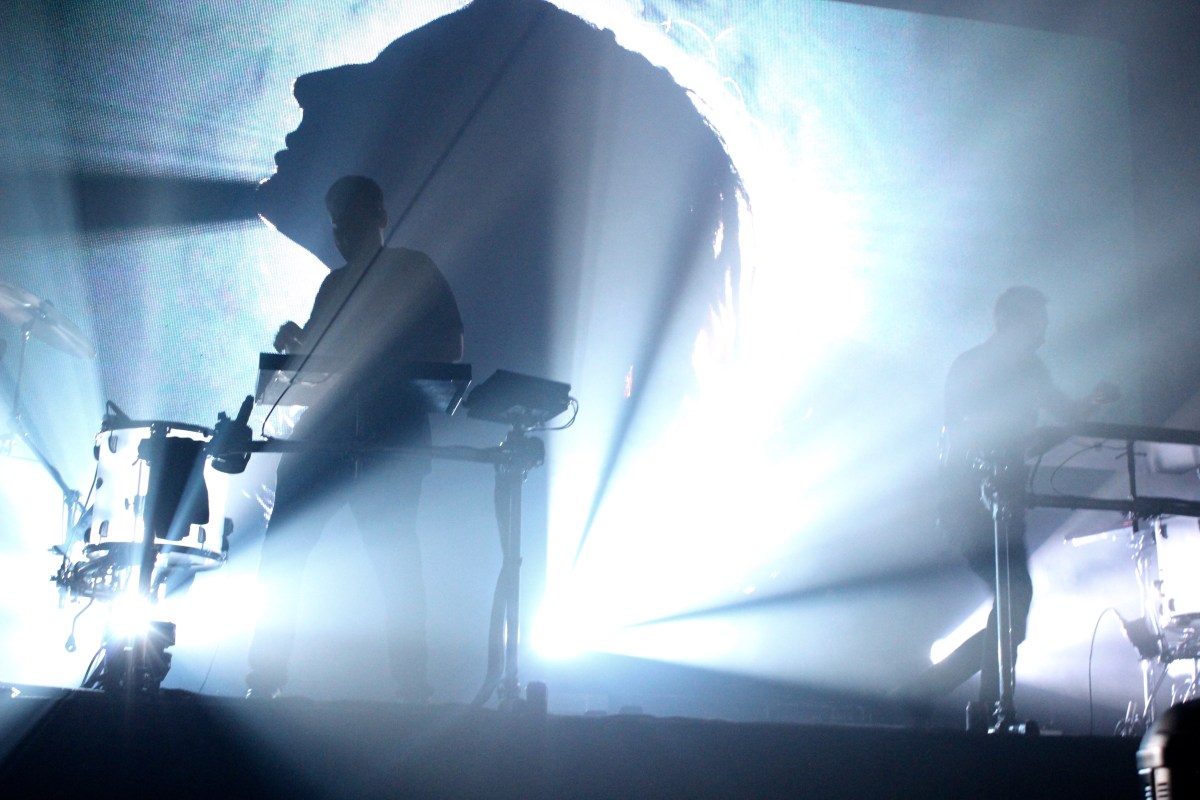
Complete with an eye-popping LED light show; ethereal visuals reminiscent of 2001: A Space Odyssey; an impeccably mixed variety of tunes old and new (even if their most recent album A Moment Apart was hot and cold); and even a fricking drum line performing alongside them, the Seattle indietronica duo brought what was not only the most ambitious set of this year’s festival, but arguably its most beautiful and well-executed. Clearly, an Odesza show is best experienced at a major concert hall like MTELUS (RIP Metropolis).
One thing M for Montreal truly plays up as a strength is its diversity, and it can especially be seen in the showcases put on over the years by publications, labels and other organizations. The final day of this year’s festival included one put on jointly by Le Bureau Export and popular French music magazine Les Inrockuptibles. Coming to Sala Rossa from across the Atlantic would include lively indie dance acts like Caspian Pool and the Pirouettes, showing off sounds seemingly influenced in various ways by synthpop, Hot Chip and the French touch sound their country counts among its most influential modern cultural exports.
To cap off what has been another great year for the festival, Quebec City singer-songwriter Peter Peter would provide Fairmount with a pleasant-sounding array of wistful indie pop, and Yamantaka // Sonic Titan would play at Le Ministère while sitting on the polar opposite side of the musical spectrum, going through some rollicking and highly experimental indie punk tunes with a bit of metal sprinkled in between. Oh, and they did it while rocking all-white face paint, too. It was a tale of two entirely different types of music in that short of a timeframe, but that’s M for you.
From the shows themselves, to industry keynotes, to events like the hangover brunch and everything in between, M for Montreal’s 12th edition was a compact – but nonetheless fun and exciting – last four days of 514 festival madness just before the cold, frigid winter arrives. While M might be less saturated with shows and more industry-focused than POP Montreal, it’s every inch as fun. Beyond that, it’s a pitch-perfect excuse to not only check out Montreal and network with industry figures and fellow music heads, but also to see what this city and its vibrant music scene have to offer.
As one of the most intriguing and festival-friendly bands to come out of Los Angeles in the last decade, Local Natives have solidified themselves as a forced to be reckoned with in the indie rock world. Now, their vocalist/keyboardist Kelcey Ayer has stepped out on his own under the moniker of Jaws of Love.; the first time any member of the group has released a side project. Ayer’s debut solo album as Jaws of Love., Tasha Sits Close to the Piano, is a personal and oftentimes darker-sounding affair with musical reference points linking to ambient electronic music. Ayer took a moment to chat with us over the phone from L.A. to tell us how the album and his solo endeavour came together, what inspired it, and how hard it is to write joyful love songs.
Northern Transmissions: You’re the first member of Local Natives to release a solo project. Since no one else in the band has done it before you, did that make it easier or more difficult to make the record since you’re essentially setting the benchmark for the rest of the band to follow if they also want to release side projects?
Kelcey Ayer: Yeah, I think it will definitely make it easier for people to do in the future. I feel like it was pretty hard just because no one in the band has ever done anything musically outside of Local Natives, so it was uncharted territory. It’s been equal parts exciting and anxiety-ridden for me.
NT: In what sense?
KA: Just how to work on something outside of something you’ve committed your life to for so long with these other people that feel like brothers, in a way that everyone feels respected. I’m just trying to not step on anybody’s toes and try to make it so that it doesn’t have a harmful effect, because it can feel kind of like infidelity in a way. It felt pretty tricky in that way, but I’m lucky because everyone’s been pretty supportive. I think I’m on the other side of actually releasing the album and feeling like it went really well. We’re about to work on another record, and it’s felt really good to have a little break from Local Natives for just a tiny second to make this record.
NT: What was the origin of the name “Jaws of Love.”, and why do you think it fits how you approach your solo material?
KA: I think for the music that I made for this record – obviously “Jaws of Love.” is the name of one of the tracks off the record – I thought it represented the tone of the project so much. I liked the idea of letting my name still be open to do whatever it can do and have this project be its own entity so it can live on and be its own thing separate from Local Natives, eventually. It definitely has not gone that way so far (laughs), but I really hope in the future that this thing can start to bloom and create its own moon next to Local Natives’ world.
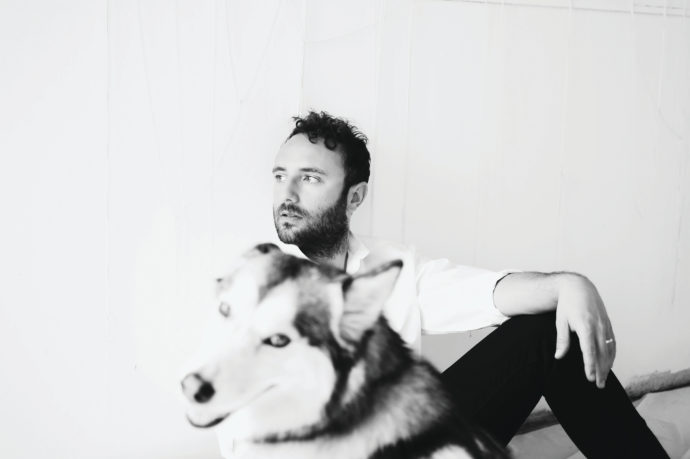
NT: Listening to the album, I get the sense that there’s a big theme of love and dealing with its “trials and tribulations” as you’ve said, not to mention the tone of the album itself seems pretty dark at times. Seeing as you’re actually happily married and named the album after your Siberian husky Tasha, what made you decide to frame the record like this?
KA: For everybody, you use music as something to lean on or to help you through something… I’ve always loved the darker, more cathartic variety of music. For this record, all the issues and any problems that may have arisen just being in a relationship and being in love kind of changed the surface on all of these songs. It just kind of ended up that way. Even though everything is really great, and you can be in a really functioning, loving relationship and still have problems just speaks to the nature of love being such a complicated thing. I guess it’s in that material that I wanted to talk about it, because I’ve always felt it really hard to actually write happy love songs. I don’t know that I have the stomach for it (laughs). Some people can, and I find that to be super impressive.
NT: How much does travelling influence your work? Because you have one song called “Costa Rica”, another called “Lake Tahoe”, and another about the license plates you saw in Hawaii.
KA: Any place I’ve gone usually ends up having some sort of effect on me. My dad was a pilot for American Airlines. I was in a pretty big family. I had three siblings – [including] a much older sibling that was out of the house when we were growing up – but we would take a lot of family trips because we would get standby tickets to go someplace, and it was affordable through my dad’s work. I ended up going to these different spots, and I’d get a new record through wherever we were going and just listened to that record nonstop. Any other time I heard that record again, it took me right back to that place. I think travelling and records have always… felt like they went hand in hand, so that might have something to do with linking different places to different songs. I think travelling is such an amazing way to grow and learn about different places, and maybe that has something to do with lending itself to having an easier time to create a story from a new place that you don’t have any baggage with, and you’re seeing something for the first time. I feel like it’s such a blank canvas to create something, or create a mood.
NT: How much of an influence does experimental and electronic music have on the sound of this record? Because I hear a lot of that in the record, and also you mentioned artists like Portishead and James Blake as being influences for the LP in other interviews, and I hear a bit of artists like Four Tet on the record as well.
KA: Those are all definitely really big influences for me. I love the idea of synthetic elements coming in and creating actual organic feelings – those are my favourite kinds of synthetic sounds, where they feel alive and untethered. Another big one for me was Jon Hopkins’ Immunity, I really got into that record. I feel like that would be amazing to collab with him one day, he’d be on a bucket list of people to work with. I love when a synth feels fluffed up and out of control. That’s what I love about Portishead’s Third. There’s some awesome videos of [Portishead member] Adrian Utley; he’s in his studio and he’s fucking with his synths, going through a tape delay, and liking synths that they use for horror movies, and using those instead of something more contemporary. It’s a pretty fun video if you want to nerd out on synth stuff.
NT: Now that the album’s out, what’s the most satisfying part of the end result for you?
KA: I’ve really tried to make it feel like a cohesive record, and something that you could just play through and it feels like one solid piece of work. I’d say the one song I’m most excited [about] and encapsulates the whole project is “Microwaves”. I was talking to someone while I was making it, and they were like ‘Yeah, you should just go as far from anything you’ve ever done, as far from Local Natives as possible, and just make the project something completely its own.’ I feel like I got the closest to that on “Microwaves”, just having some freeform moving thing that doesn’t even repeat parts that often – until it repeats the same thing for three minutes! (laughs)
NT: What do you think the future holds for you as far as more solo material?
KA: I’m excited to see how the album goes from here, and how it will hopefully get passed around to anyone else who hasn’t heard it yet in the Local Natives world, and just let it be this thing that finds its audience slowly. It’s a grower of an album, I suppose, and I’m excited to see what doors are unlocked through it. I’m excited to do more records for [Jaws of Love.]… I’m always gonna love being in Local Natives and writing with them, but it’s nice to know that I have this other outlet as well that I can feed from time to time.
The last two days of POP Montreal 2017 were a doozy, with a hyped reunion show, a promising indie rocker from Oakland, and an eventual Polaris Prize winner. Above all, it was just more proof that as far as multi-venue music festivals go, POP is a national treasure. Here’s our second and final recap of POP Montreal’s Sweet Sixteen.
Aside from their BBQs at the POP Quarters, one of the most fun elements of the entire festival is when shows are held on the rooftop of Montreal’s Ubisoft building. The Montreal HQ to one of the biggest video game companies in the world hosted several sets through the weekend, with Saturday’s bill including local acoustic indie pop singer-songwriter Jason Bajada, and Francophone folk outfit Avec pas d’casque (the non-French speakers around me were calling them “Avec podcast”, because I suppose that’s easier).
Saturday night really began, however, with a performance – and some hilarious stage banter, to boot – at the upstairs of the Rialto from Toronto-based Colombian singer Lido Pimienta. If you have to pigeonhole her, you could argue her music is a mixture of traditional Latin-American music, Björk, and electronic music à la Massive Attack.
The tone of her music can be extremely political – she asks all the women, women of colour and trans people go ahead of all the men in the crowd, and performs a song protesting Nunavut selling water bottles for $20 – and her style is very experimental while also being strangely hypnotic. That said, she’s got obvious talent in both her performance and vocal elasticity, and the (unfortunately) smallish crowd ate it up. The fact that she’d win the Polaris Music Prize two days later is merely a happy coincidence.
Meanwhile, ‘90s noise/blues rock band Royal Trux took to Fairmount in front of a crowd noticeably smaller than the one this venue had for Ty Segall earlier in the week. The music felt like a jammier, bluesier Dinosaur Jr., with guitar noodling, jumbled song structures, and complex bass riffs front and centre. It’s intriguing for what it is, but it’s a lot to get used to, and singer Jennifer Herrema also slurred as if she could have been drunk or high during the performance. (She might not have been, mind you, but you have to wonder.)
That said, night four at POP Montreal 2017 would end with a loud bang thanks to the first show since 2011 by Montreal dance punk-flavoured indie rockers Think About Life. Whether or not this show is simply a one-off reunion remains to be seen, but sweet Jesus did they ever bring it.
With a packed crowd at the Piccolo Rialto waiting in anticipation similar to that felt for the Unicorns in 2014, frontman Martin Cesar comes onstage with a Real Madrid jersey and pure intensity from start to finish. Positive vibes, crowd-surfing, and a trip down memory lane for Montrealers who knew the band during the late nineties would ensue.
As if the show wasn’t crazy enough, some dude in a wizard costume – or a Jesus costume, I’m not sure which – comes onstage and rips through a few songs on bass. Utter madness.
The band then closed with, rather appropriately, “Sweet Sixteen”. Given how much of a frenzy their crowd was in throughout, they’ll need to speed up the timeline of their next reunion show.
It’s hard to imagine topping that on the final day, which is probably partly why the Sunday was the quietest day of the festival. My choice of curtain-closing for this year’s edition would be Stef Chura (indie rock with a Stevie Nicks-meets-grunge voice); Jay Som, aka Oakland musician Melina Duterte, who fuses dream pop with jangly Mac DeMarco-esque guitars to make what the New York Times calls “D.I.Y. bedroom pop”; and Hurray for the Riff Raff, a bluesy Americana act from The Bronx with very political between-song monologues (“We’re Hurray for the Riff Raff… we’re from the Divided States of America”), and a singer with a strong, technically gifted voice and an energetic live persona.
I didn’t go to as many shows or venues as I wanted to this year, but one can only be in one place at a time – unless, of course, you’re Hermione Granger and you own a Time-Turner. That’s the beauty and the curse of POP Montreal: it’s full of great shows and both new and old artists to check out in a smaller venue, but its over-saturation can also give you some definite FOMO. In any case, I can’t wait to do it all again next year.
Once again, another wild – and in this year’s case, very wet – edition of Osheaga has made it into the history books. Despite inclement weather permeating the better part of day one, as well as being held at a temporary site due to the usual festival ground undergoing construction until 2019, the Montreal midsummer festival made the best of a bad situation and satisfied tens of thousands of keen festival-goers once again. Here are my top 10 performances from across the three-day event.
#10: Phantogram
Photo credit Pat Beaudry
Kicking off my list is an early afternoon main stage set that, frankly, would’ve gone down just as nicely at night time, if not more so. New York electronic rock duo Phantogram didn’t play in front of the biggest crowd over the weekend, but it hardly seemed to faze them, as they went through their set with plenty of enthusiasm and a full band adding some oomph to their hip hop-edged sound. Singer/keyboardist Sarah Barthel went full Geddy Lee by singing and playing the bass, and the black and white graphics in their onstage projections looked incredibly slick.
#9: Cage the Elephant
Photo credit Pat Beaudry
For a band with seven career number one singles on Billboard’s alternative charts, you’d expect Cage the Elephant to be pushed further toward the top of the bill. Nevertheless, despite a late afternoon set time and two members missing from the equation, the crowd ate it up like a mouth-watering steak. Performing with genuine liveliness and positive energy – topped off by frontman Matthew Shultz’s relentless shimmying that would’ve given Thom Yorke a pretty decent run for his money – they delivered a rollicking performance in front of a massive audience, showing how they’ve managed to become one of the most popular alt-rock bands of this decade.
#8: Sampha
Photo credit Tim Snow/ EVENKO
Still riding high off his debut full-length Process – arguably one of the best albums of 2017 thus far – Sampha Sisay descended onto Osheaga on Friday with his trademark falsetto, skittering alt-R&B beats, and a band including two drummers (one on live drums, another on electronic) backing him up. Thankfully for us, the sky stayed relatively clear and dry as well. Even though his vocals were a bit quiet at times – mic issues seemed to be a problem basically throughout the entire festival – his music is stirring and utterly gorgeous (listen to songs like “Plastic 100°C” and “Timmy’s Prayer” if you need proof), and his performance matched its intensity and emotional rawness.
#7: Lorde
Photo credit Pat Beaudry
Considering how rainy the first day of this year’s festival was, Lorde coming onstage with a bright white umbrella to match the colour of both her dress and pair of sneakers was entirely fitting. Fashion choices aside, her headlining performance was executed beautifully. Cranking up the theatrics and production value compared to her first time playing Osheaga in 2014, the Kiwi songstress brought the hits (she opened with “Tennis Court” and saved “Royals”, “Team” and “Green Light” for the end), the super-long monologues between songs, and occasionally, the quirky dance moves – basically everything one would want and expect from a Lorde show.
#6: The Weeknd
Photo credit Pat Beaudry
Perhaps the most divisive headliner this year – partially because he’d just played the Bell Centre back in May – Abel Tesfaye (best known as the Weeknd) nonetheless returned to Montreal with a rapturous grand finale mostly showcasing his more polished and pop-friendly current sound rather than the hazy and drugged-up brand of alternative R&B he made his trademark back in 2011 (“Wicked Games” was the lone track he performed from that era). Regardless, Tesfaye undeniably capped off the Osheaga Weeknd (I know, groan) extremely well by delivering hit after hit while working the crowd with astonishing ease. The fireworks toward the end of “I Feel it Coming” were merely a cherry on top.
#5: MGMT
Photo Credit Pat Beaudry
Regardless of whether or not you’re indifferent toward their newer material (or even to their heavily psychedelic and left-field 2010 sophomore album Congratulations), MGMT remain a force to be reckoned with as a live act. Even during elongated renditions of older songs, the oddball psych-rockers sounded as clean as a whistle. Songs like “Time to Pretend”, “Electric Feel” and “Kids” – the tracks this crowd cheered loudest for – still sound just as fresh and exciting now as they did a decade ago, and they can still round up a huge festival crowd and leave them riding a wave of nostalgia and good vibes.
#4: Run the Jewels
Photo credit Pat Beaudry
It’s absolutely insane how well Run the Jewels’ uncompromising sound, incredibly smart lyrics and raucous energy on record translates into their live performances. It’s seamless. Despite some initial problems with their mics, Killer Mike and El-P tore up the Scène de la Rivière to hit the mid-day Osheaga crowd with hard-nosed rhymes, booming bass and mosh pits galore. They knew how to restore calm and order as well, with Killer Mike telling everyone to take two steps back when people in the front were getting crushed. The New York/Atlanta duo seldom disappoint in smaller indoor venues, and they showed on Sunday that they can just as easily rock crowds several times as big.
#3: Broken Social Scene
Photo credit Pat Beaudry
Mesmerizing. Few adjectives better sum up Broken Social Scene’s return to the Osheaga main stages. Kevin Drew and his gang of Canadian indie rock royalty gave a career-spanning spectacle, opening with “Cause = Time” from their landmark 2002 album You Forgot it in People, all the way to new material from their solid fourth LP Hug of Thunder. In addition to Drew’s monologues to the crowd calling for love and friendship, the band also brought out Metric’s Emily Haines to help sing newer songs (“Halfway Home”, “Protest Song”) and an old chestnut (“Anthems for a Seventeen Year-Old Girl”). If they’re not one of the greatest Canadian bands of the last 25 years, I don’t know who would be.
#2: Justice
Photo credit Pat Beaudry
Your best memories of Justice are likely through their debut LP Cross (†), a slap bass-heavy thrill ride of hard rock-tinged, ultra-cool electro house. A full decade later, their prowess as live performers is still as strong as ever. Smoothly mixing both newer and older material in an hour-long set with a huge white light show, the French duo reminded all in attendance just how much they’ve deserved their legacy over the years as modern EDM forefathers. Newer single “Safe and Sound” set the tone deliciously, while older classics like “Genesis”, “D.A.N.C.E.” and “Stress” feel very ahead of their time nowadays.
Before I unveil my top pick, here are a few honourable mentions:
– The Lemon Twigs (Shoutouts to their drummer, who looked like he’d just come back from an audition to join KISS)
Photo credit Pierre Bourgault
– Majid Jordan (OVO’s lone representatives over the weekend)
Photo credit Tim Snow / EVENKO
– Liam Gallagher (Yes, he played “Wonderwall”)
Photo credit Pat Beaudry
#1: Alabama Shakes
Photo credit Pat Beaudry
Brittany Howard and co have earned a reputation for being absolute dynamite live, and their Osheaga set this year was no exception. The penultimate main stage show of this year’s festival would combine Howard’s effortless stage presence and commanding voice with a show full of soul, firepower and pure musicianship. Sadly, Howard’s mic would suddenly get cut off during “Over My Head,” bringing their otherwise stunning performance to an abrupt and extremely awkward end. Regardless, this should prove once and for all that they belong on big festival stages. If they keep their momentum going, you’d have to think a future Osheaga headline slot is theirs for the taking.
*Cover photo credit Tim Snow/ EVENKO
This article originally appeared on the blog for WatchMojo.com.